gladGAN
Goal: Detect rare graph patterns that differ from the majority of graphs.
Some real world applications include:
- Spotting toxic molecules in chemical compounds analysis.
- Recognizing patient neuroimaging in disease diagnosis.
- Detecting abnormal internet activity graphs.
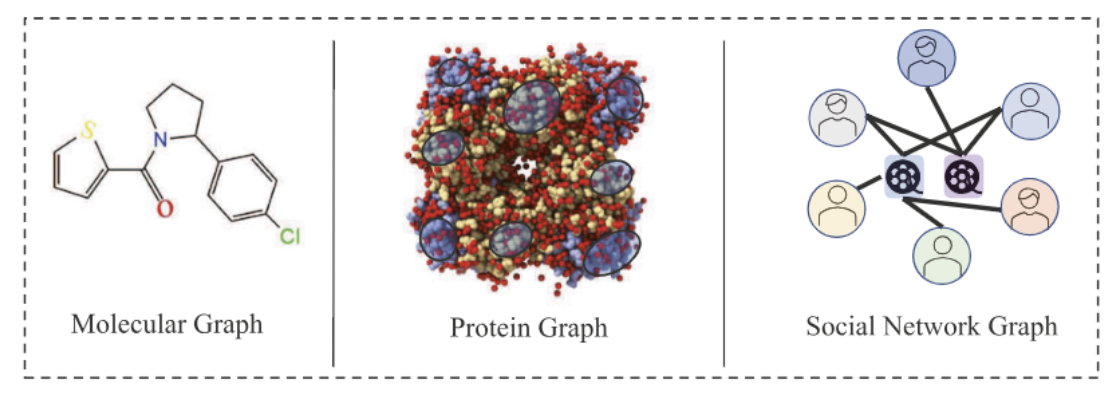
Problem: Can sometimes be very difficult...
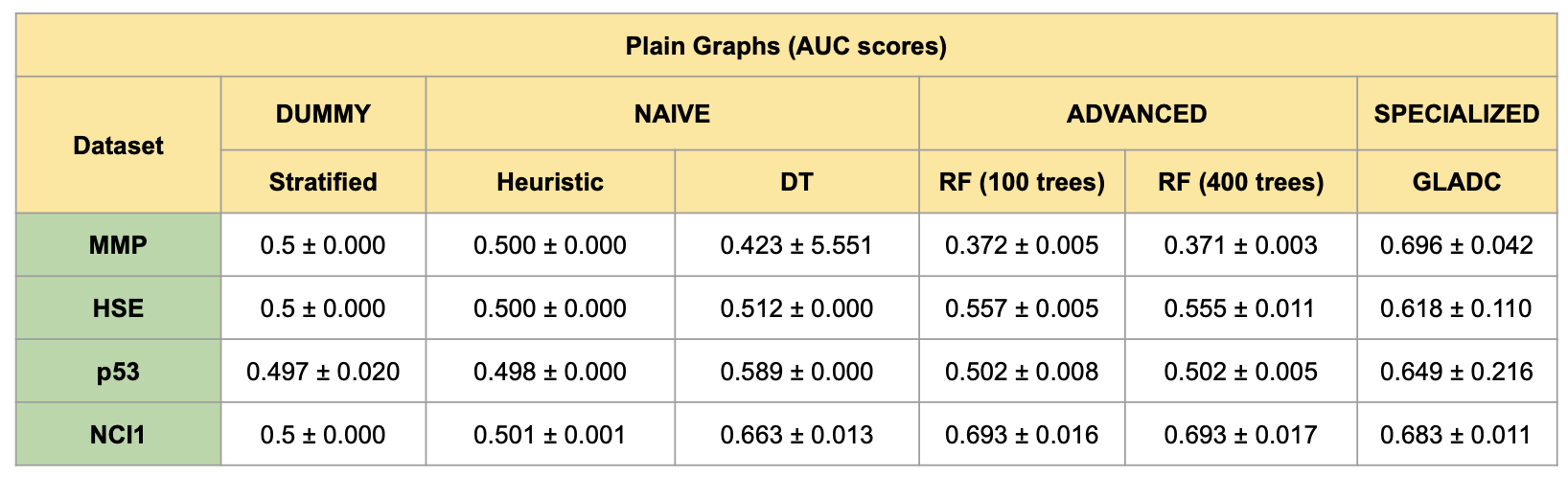
GANs
GANs have shown huge potential on image anomaly detection (IAD). Can we translate GANs’ application on IAD to GLAD?
Solution: gladGAN. A novel approach which lands in the category of “Generic normality feature learning” (GLADC’s close cousin).
- Non anomaly-aware
- Concerned only with normal graphs
Latent Space
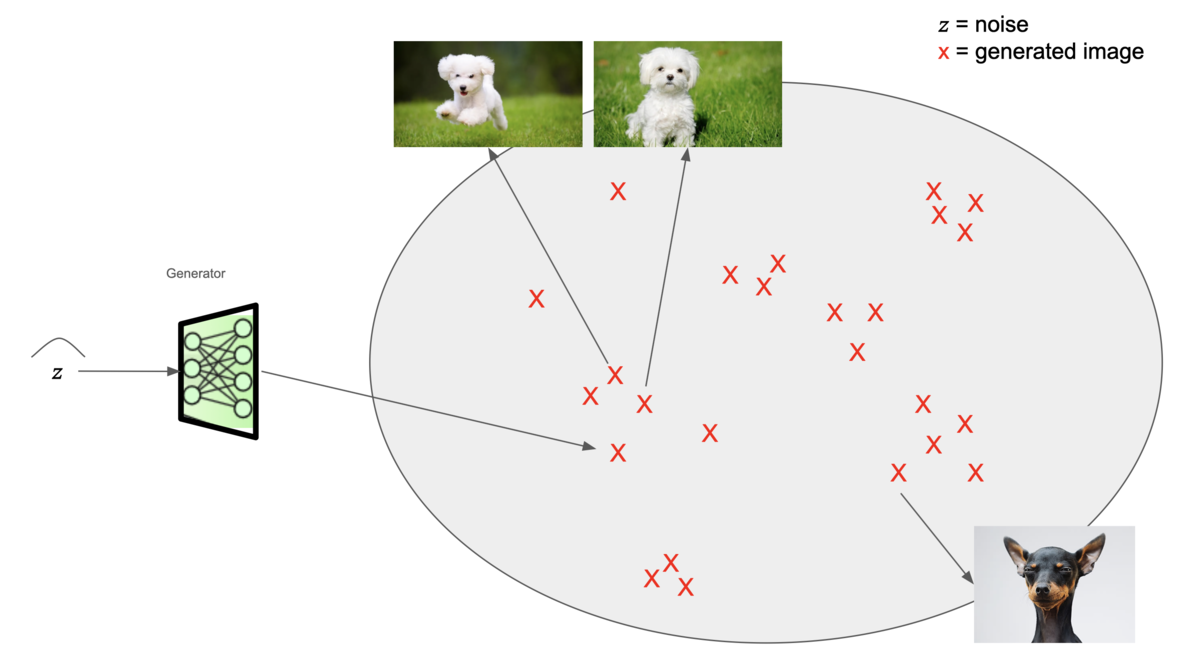
How does this relate to anomaly detection?
The generator has learned the mapping G(z) = z → x\hat. Which means that for every real image x there should an x\hat in the latent space X where x ~ x\hat (Assuming G’s training has been successful).
So we can compare iteratively...
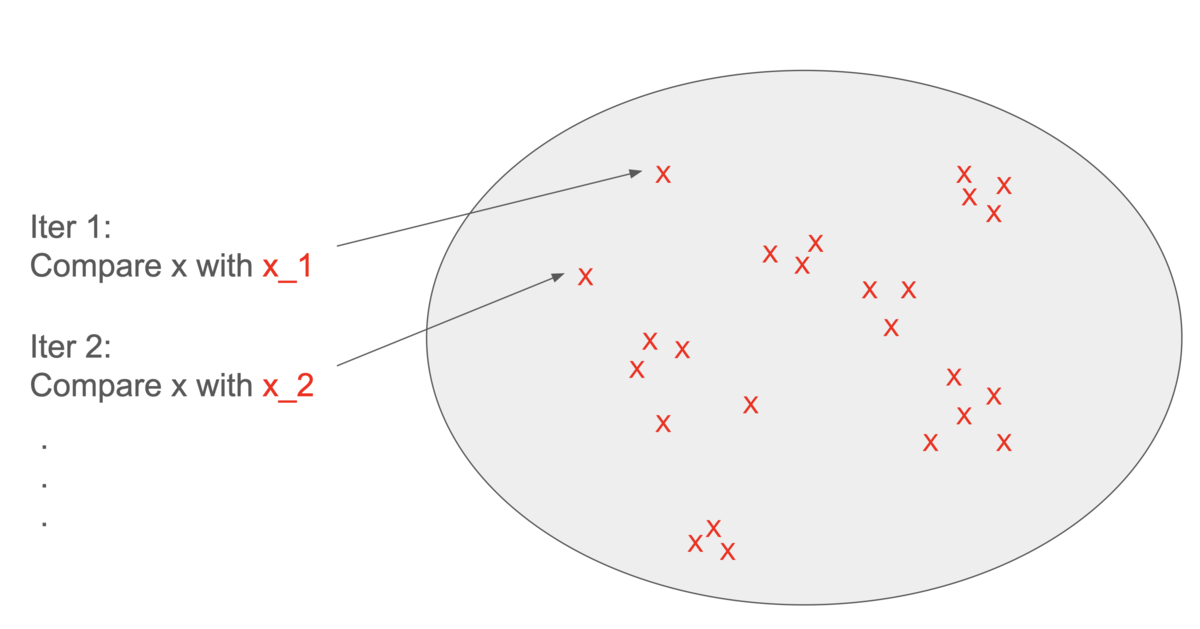
Works! But as you can imagine, the time that takes to search for x_n grows linearly with the size of X (X is usually huge).
But there is a trick! Have an encoder learn to map a given image x to a noise vector/matrix z. This drastically improves performance (T. Schlegl et al. 2019).
gladGAN
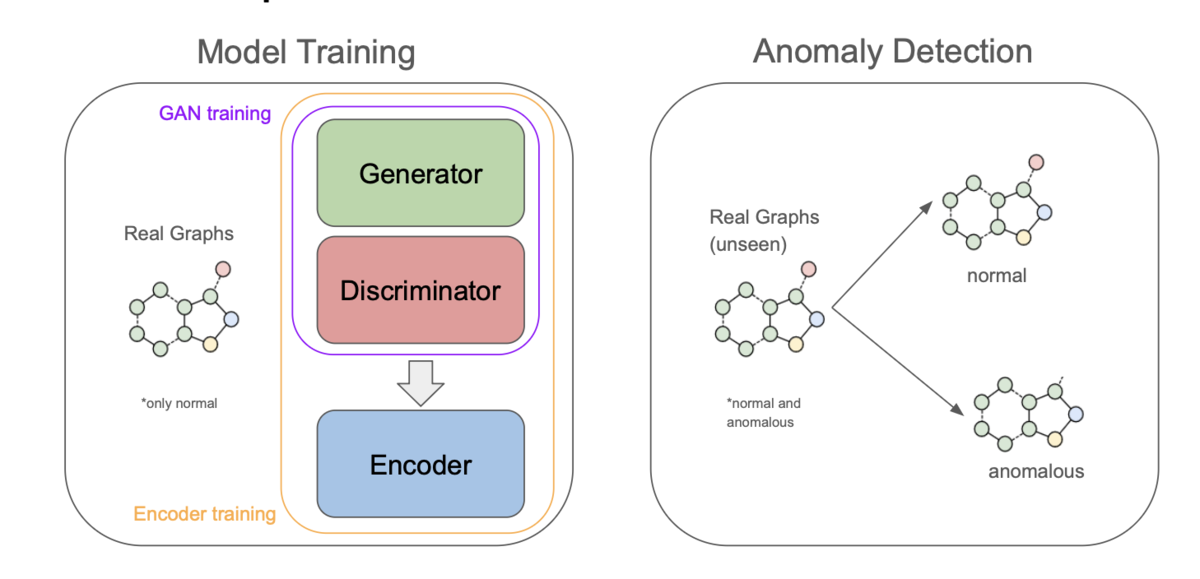
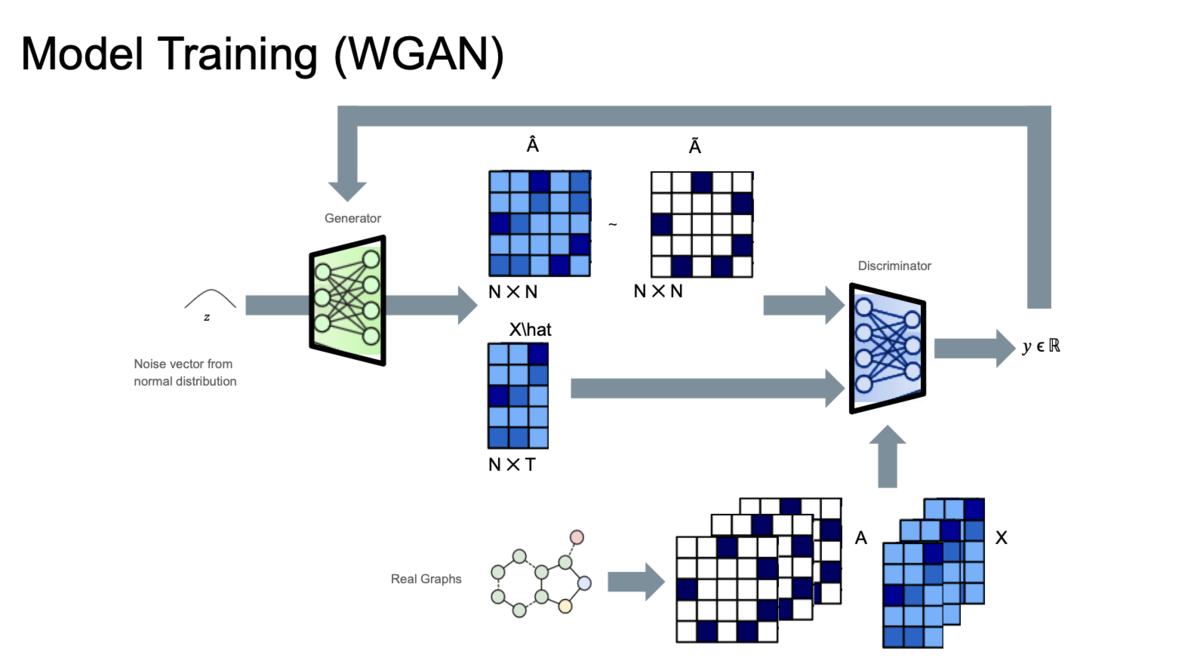
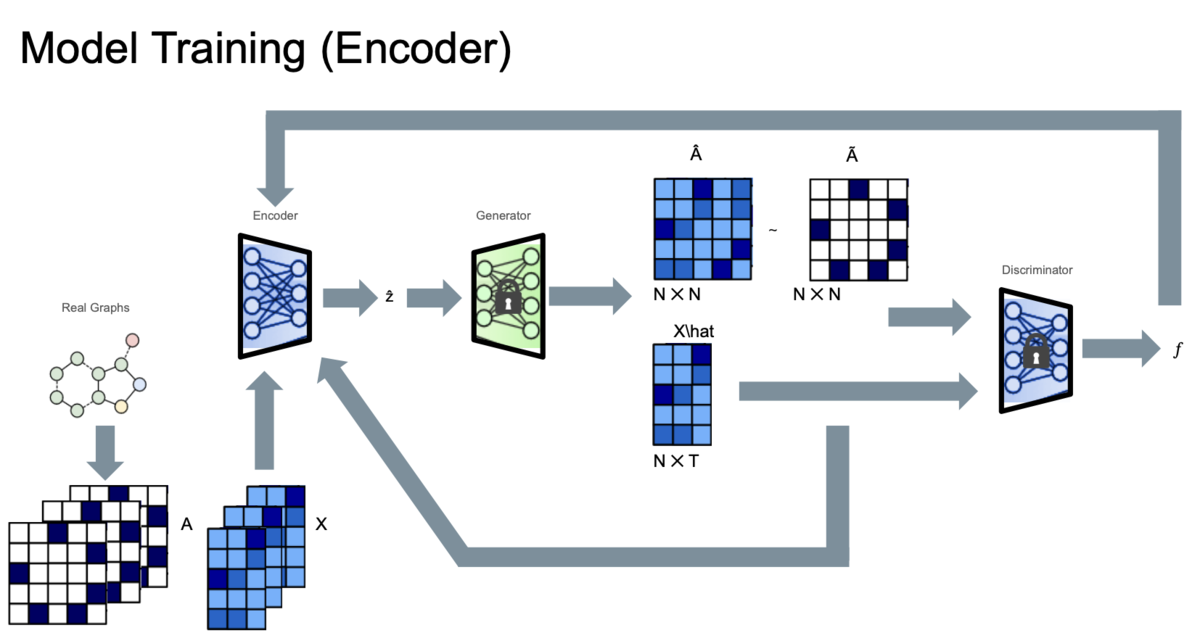
Graph anomaly detection is a relatively hard problem: a scientific gap is identified. GANs are proposed as a novel approach to tackle this problem.